
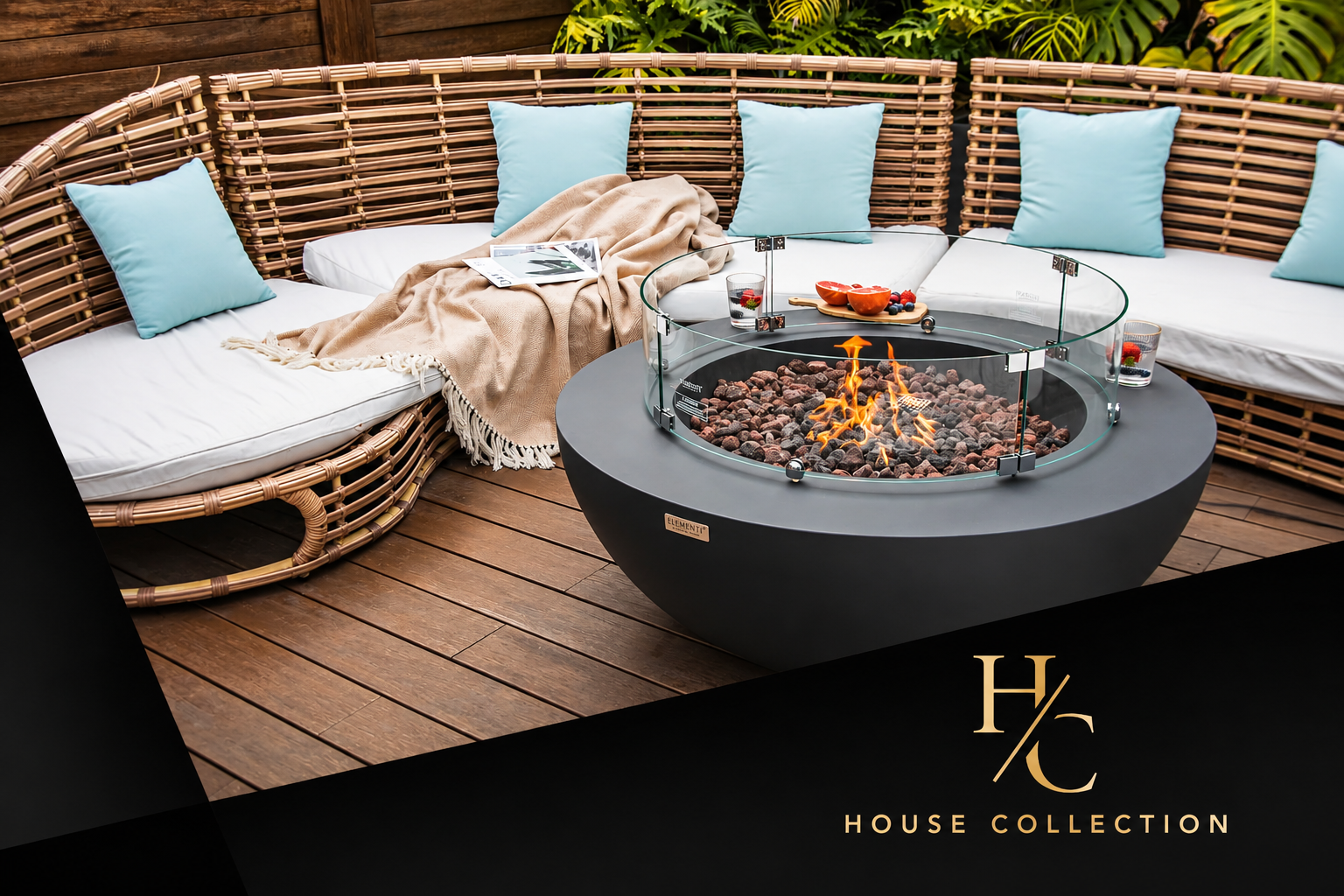
Elementi: Fire as a Design Element in Outdoor Architecture
Fire becomes an architectural feature rather than a purely functional element. Through mineral textures, sculptural forms and considered proportions, Elementi brings a distinctive design language to contemporary outdoor environments.
An outdoor space can be organised around a dining table, a seating arrangement, a landscape feature or an architectural view. Elementi introduces another compositional possibility through products that combine living flames, mineral surfaces and sculptural geometry. Its collections offer architects and interior designers a way to explore the relationship between furniture, atmospheric lighting and the experience of spending time outdoors.
Elementi: Rethinking the Relationship Between Fire and Space
Elementi specialises in contemporary fire features and furniture, bringing together material development, design and combustion technology. Its products are conceived as integral elements of outdoor environments rather than purely functional accessories.
Fire becomes a focal point for social interaction. Its constantly changing movement and light introduce a sensory quality that transforms the atmosphere of a space, particularly at dusk and after dark.
This approach is relevant to private residences, hotels and hospitality projects, where outdoor areas increasingly form an extension of interior living environments.
Fire Tables and Fire Pits: Different Architectural Expressions
Fire tables are among Elementi's defining product categories. Their designs integrate burners within substantial mineral-looking structures, creating furniture that can become the centre of an outdoor seating arrangement.
The collection includes different sizes, proportions and geometries, allowing designers to respond to a wide range of spatial configurations.
Fire Tables for Outdoor Lounges
Low-profile models with generous horizontal surfaces work particularly well alongside outdoor sofas, lounge chairs and modular seating systems.
Designs such as Hampton introduce an elongated rectangular form, while Manhattan offers a more geometric composition with a distinctive mineral appearance.
In both cases, the flame creates a dynamic source of light within the furniture arrangement, adding movement to otherwise static materials.
Fire Bowls and Sculptural Forms
Fire bowls offer a different interpretation of the same concept. Their curved volumes create a visual contrast with the linear geometry of terraces, paving and building façades.
The Lunar Bowl design demonstrates how a rounded form can give a fire feature a strong sculptural identity.
Such products can become focal points in gardens, courtyards and informal gathering areas, provided that the relevant installation requirements and safety clearances are respected.
GFRC: Concrete as a Design Material
A central aspect of Elementi's material identity is GFRC, or Glass Fiber Reinforced Concrete.
This reinforced cementitious material enables the development of substantial-looking forms with a lower weight than equivalent conventional solid-concrete constructions, depending on product geometry and manufacturing methods.
Its design versatility makes it particularly suitable for fire tables, bowls and contemporary furniture with pronounced volumes and carefully developed surfaces.
Elementi explores finishes inspired by travertine, sandstone, slate and other natural materials. These mineral textures can be coordinated with stone paving, timber decking, architectural cladding and outdoor furniture.
The manufacturer also applies protective surface treatments intended to improve the performance of its products under changing environmental conditions. Exposure limitations, cleaning methods and maintenance requirements should nevertheless be checked against the documentation for each model.
Classic and Premium: Two Approaches to Material Expression
Within its gas fire feature range, Elementi presents two principal collections: Classic and Premium.
Classic focuses on fire tables and bowls manufactured using GFRC, with a strong emphasis on mineral character, solid-looking forms and architectural simplicity.
Premium introduces additional design possibilities through refined finishes and selected models incorporating marble-effect porcelain surfaces, alongside different burner configurations.
For architects and interior designers, these collections offer distinct visual directions while allowing technical requirements to be evaluated at product level.
Beyond Fire: Sculptural Concrete Furniture
Elementi's product universe also includes furniture made from glass fibre reinforced concrete.
Coffee tables, side tables and complementary pieces share a material language with the brand's fire features, making it possible to create coordinated outdoor compositions.
Some designs explore organic shapes reminiscent of naturally eroded stone, while others use more disciplined geometries and understated finishes.
These pieces can work particularly well in contemporary gardens, minimalist terraces and projects seeking a strong relationship between architecture and landscape.
Combining furniture without burners with a carefully selected fire feature helps establish visual hierarchy, ensuring that the principal element remains clearly defined within the overall composition.
Applications in Residential and Hospitality Architecture
In a private residence, a fire table may anchor a lounge area beside a swimming pool, within a sheltered courtyard or on a terrace overlooking the surrounding landscape.
In hotels and hospitality environments, architectural fire features can help define social spaces, complement outdoor lounges and enhance the atmosphere of evening gathering areas.
Successful integration requires more than visual coordination. Circulation, seating distances, ventilation and exposure to wind all need to be considered.
Designers must also evaluate fuel supply arrangements and access to components requiring inspection or maintenance.
These considerations are particularly important where outdoor furniture and fire features form part of a larger coordinated architectural specification.
Key Considerations When Specifying an Elementi Fire Table
1. Scale and layout. The dimensions of the selected model should relate appropriately to the surrounding seating, circulation routes and available space.
2. Material coordination. Mineral finishes should be assessed alongside paving, cladding, furniture and the broader architectural palette.
3. Combustion technology. Gas and bioethanol systems have different requirements. The permitted fuel and installation conditions must be verified for the individual product.
4. Safety and compliance. Clearances from combustible materials, ventilation requirements and operating instructions should be established using the relevant manufacturer documentation.
5. Maintenance and everyday use. Cleaning procedures, frequency of operation and protection when the equipment is not in use should inform the selection.
Elementi Within the House Collection Brand Selection
House Collection has selected Elementi for its ability to introduce fire as an architectural design resource through a coordinated range of furniture and outdoor features.
The brand's mineral surfaces, contemporary geometries and varied product formats offer useful possibilities for residential and professional projects.
Through our Barcelona showroom and B2B platform, we support architects and interior designers in discovering brands, exploring materials and comparing solutions according to the needs of each project.
For terraces, gardens and hospitality environments, House Collection can help professionals explore Elementi's range and consider suitable options within their overall design specification.
FREQUENTLY ASKED QUESTIONS
What products does Elementi manufacture?
Elementi develops fire tables, gas fire features, fire bowls and contemporary furniture. Its range also includes bioethanol solutions and products manufactured using glass fibre reinforced concrete.
What is GFRC concrete?
GFRC stands for Glass Fiber Reinforced Concrete. It is a reinforced cement-based material that enables defined geometries and an effective relationship between weight and strength for various furniture and architectural applications.
What is the difference between gas and bioethanol fire tables?
The main difference lies in the fuel and combustion system. Each technology has specific operating, ventilation, installation and maintenance requirements that must be checked in the instructions for the selected model.
Where can Elementi fire tables be installed?
Models designed for outdoor use can be incorporated into terraces, gardens and hospitality environments. Their exact placement depends on safety clearances, ventilation, fuel requirements and the manufacturer's instructions.
How should architects select a fire table for an outdoor project?
Key considerations include dimensions, furniture layout, material finish, combustion technology, safety and maintenance. The selected product should respond to both the architectural concept and the practical conditions of use.
Why has House Collection selected Elementi?
House Collection values Elementi's integration of fire, contemporary design and mineral materials, offering architects and interior designers distinctive possibilities for outdoor compositions.