
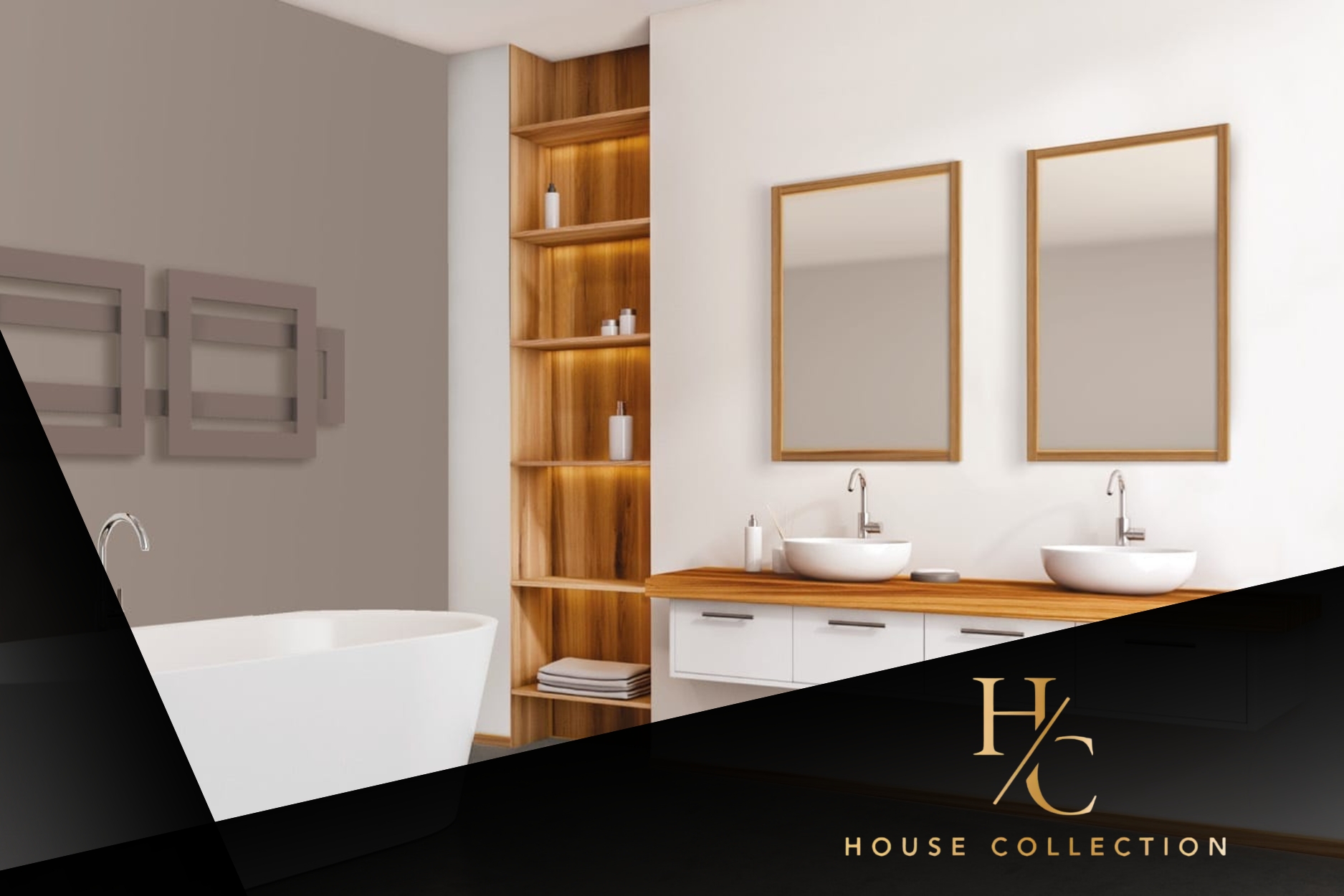
BREM: Radiators as Architectural Design Elements
BREM es una firma italiana especializada en radiadores de diseño, toalleros y soluciones de calefacción decorativa para proyectos de arquitectura e interiorismo. Sus colecciones LAME, CrossFRAME, PANELS, TubesDESIGN y BREM’ART exploran distintas maneras de integrar la calefacción en el espacio mediante geometrías, acabados y composiciones singulares. House Collection incorpora BREM a su selección de marcas para arquitectos, interioristas y prescriptores. Desde su showroom profesional en Barcelona, House Collection permite abordar la selección de radiadores en relación con los revestimientos, el mobiliario y las necesidades del proyecto. La prescripción debe considerar la potencia térmica, la instalación, las dimensiones y las condiciones de uso.
Heating elements occupy a significant place in interior planning, although they have traditionally been treated as secondary components. Their position, dimensions and visual presence influence furniture layouts and the composition of walls. Italian manufacturer BREM addresses this relationship through radiators that combine thermal performance with a distinctive architectural identity, allowing heating to become part of the design process.
BREM: Italian radiators designed for architecture
BREM is an Italian manufacturer specialising in designer radiators and towel warmers. Based in Osio Sotto, in the province of Bergamo, the company develops heating products that transform steel into structures with a clear aesthetic purpose.
Its approach is based on the idea that radiators do not necessarily need to disappear visually to become integrated into a space. They can also contribute actively to defining its character.
The BREM catalogue includes collections built around vertical elements, geometric frames, flat surfaces and tubular structures. This diversity allows architects and interior designers to explore different relationships between heating equipment and architectural composition.
For professional specification, the value of these products lies in their ability to interact with finishes, furniture and spatial proportions while responding to the practical heating requirements of the project.
LAME: steel as a sculptural composition
Designed by Davide Brembilla, LAME is one of BREM's most distinctive collections. Its construction combines rectangular steel tubes connected by circular bars, creating a sequence of vertical elements with a visually lightweight appearance.
The spaces between the components allow light to influence the perception of the radiator. The profiles cast shadows and produce a composition that changes depending on the viewing angle.
This approach is particularly relevant in interiors where the radiator occupies a visible wall and contributes to the character of the room.
The family also includes LAME-UP, a freestanding interpretation designed by Davide Brembilla. Its vertical structure allows the radiator to be conceived as an independent volume with a sculptural presence.
Such applications require careful consideration of available space, connections and safety conditions. The visual independence of a product does not remove its installation requirements.
CrossFRAME: geometry and visual rhythm
The CrossFRAME family explores compositions created through squares, rectangles and overlapping or intersecting elements. Its design language moves beyond conventional radiator structures to introduce forms reminiscent of architectural frames.
Among its products is CROSS, designed by Luigi Brembilla, which combines interwoven squares and rectangles. It can function as a towel warmer or as a decorative heating element.
CROSS-Q develops a related composition based on overlapping squares and right angles. Its strong geometry can create a focal point in contemporary bathrooms and other interiors with a graphic architectural language.
The collection demonstrates how a functional product can establish visual relationships with tile joints, wall panelling, mirrors and other orthogonal components.
When using these designs as towel warmers, the available space and the practical handling of towels must be considered alongside the proportions of the radiator itself.
PANELS: flat surfaces integrated into interior walls
The PANELS family brings together radiators and towel warmers constructed using flat elements. Compared with more sculptural structures, these products can establish a closer visual relationship with architectural wall surfaces.
The range includes designs such as LAMINA, S-PLATT and SUIT, each presenting a different interpretation of the heating surface.
Their architectural potential lies in the opportunity to consider the radiator as part of the wall composition, taking into account available width, height and surrounding finishes.
A restrained geometric surface can become prominent through contrasting colour or remain visually discreet within a coordinated material palette.
Before selecting a configuration, the dimensions and heat output of the specific model should be checked. Similar visual characteristics do not necessarily indicate equivalent thermal performance.
TubesDESIGN: the expressive potential of tubular elements
The TubesDESIGN collection uses steel tubes to create radiators and towel warmers with different formal arrangements.
Models such as CHEM, FORM, GRATA, RAW and WIND demonstrate the variety of compositions that can be developed through this construction approach.
Tubular elements introduce linear rhythms, open structures and distinctive relationships between solid and empty space. In certain interiors, these features can reduce the perceived visual mass of the heating equipment.
In bathrooms, the distribution of individual bars also influences how easily the product can be used as a towel warmer. Specification should therefore consider accessibility and practical clearances as well as appearance.
BREM’ART: where heating meets artistic expression
BREM’ART represents a distinctive direction within the manufacturer's portfolio. The collection brings together radiators developed through artistic approaches, giving heating equipment an expressive role beyond conventional geometry.
Products within the range include GRAFFI, TERRA LUNARE, CAPITONNÉ and CONTINUUM TRE, offering different interpretations of composition, texture and surface treatment.
This approach allows selected interiors to incorporate functional pieces that also contribute to their visual narrative.
Such solutions may be particularly relevant in reception areas, distinctive residential spaces or projects in which carefully selected objects play an important role.
Nevertheless, professional specification must preserve a balance between the expressive value of the piece and its heating performance, installation requirements and maintenance needs.
Colours and finishes: coordinating radiators with interior materials
BREM offers a colour range that allows different relationships to be explored between the radiator and surrounding materials. The selected finish can significantly change the perception of a particular geometric design.
A colour close to the wall finish can establish visual continuity. By contrast, a strongly differentiated tone gives the radiator a more independent presence within the composition.
In projects featuring timber, stone or mineral surfaces, finish samples should be compared under the expected lighting conditions. Texture and sheen can be as important as colour in determining the final result.
Available colours, special finishes and possible limitations should always be verified for the selected model.
Electric and hydronic radiators: specification considerations
The BREM portfolio includes radiators designed for water-based heating systems and selected electric versions. These options provide flexibility for different heating installations, although not every model is necessarily available in every configuration.
Heat output and operating temperatures
The required heating capacity depends on room characteristics, insulation, heat losses and the operating conditions of the heating system.
Designers should consult the declared heat output and the reference temperature difference for the selected model. A performance value established under one set of conditions should not automatically be applied to systems operating at different temperatures.
Installation compatibility
Before specifying a radiator, it is important to review connection arrangements, allowable operating pressure, fixing systems and the characteristics of the heating circuit.
For electric versions, power supply requirements, control systems and suitability for the intended location must also be checked.
Positioning and maintenance
The radiator should be positioned to allow appropriate heat distribution and practical cleaning and maintenance. Clearances from other elements must follow the manufacturer's technical guidance.
Bathrooms and wet areas require particular attention to the applicable electrical and safety regulations.
BREM in residential, hospitality and contract interiors
In residential projects, designer radiators can be incorporated into living rooms, bedrooms, bathrooms and transitional areas. The different product families allow heating elements to respond to minimalist interiors, more expressive compositions or environments defined by material character.
In hospitality projects, towel warmers can contribute to bathroom identity, provided their arrangement remains practical and their performance meets the intended requirements.
Contract applications introduce additional considerations, including durability, cleaning procedures, accessibility and coordination with the building's mechanical systems.
BREM's product diversity allows heating to be considered as part of interior design from the early stages of a project, rather than being resolved only after the main architectural decisions have been made.
BREM at House Collection: combining heating and design
House Collection includes BREM within its B2B selection of brands for architects, interior designers and professional specifiers. Through its professional approach and Barcelona showroom, House Collection provides a context for exploring heating solutions alongside other materials and components.
Specifying a radiator involves considering its visual expression together with finishes, furniture, spatial dimensions and technical requirements.
For projects seeking to integrate heating and architectural design, House Collection provides a professional point of contact to explore BREM collections and assess suitable options for the proposed interior.
FREQUENTLY ASKED QUESTIONS
What products does BREM manufacture?
BREM is an Italian manufacturer specialising in decorative radiators, towel warmers and designer heating solutions. Its portfolio includes vertical structures, geometric compositions, flat surfaces and tubular models.
What distinguishes BREM LAME radiators?
Designed by Davide Brembilla, LAME combines rectangular steel tubes connected by circular bars. Its vertical composition gives the radiator a strong sculptural presence.
What is the difference between LAME and CrossFRAME?
LAME uses vertical heating elements, while CrossFRAME explores overlapping or intersecting square and rectangular frames. The collections offer different approaches to architectural integration.
Does BREM offer electric radiators?
Yes. Selected BREM models are available in electric versions alongside products for hydronic heating systems. Available configurations and technical requirements must be verified for each product.
How should the required heat output of a BREM radiator be calculated?
Heating capacity should be determined from the room's heat losses and the operating conditions of the heating system. The final selection must be checked against the manufacturer's technical performance data.
Where can architects and interior designers explore BREM?
BREM is included in the brand selection at House Collection, a B2B platform with a professional showroom in Barcelona. Designers can enquire about specification possibilities and finishes, subject to confirmation of available products and samples.